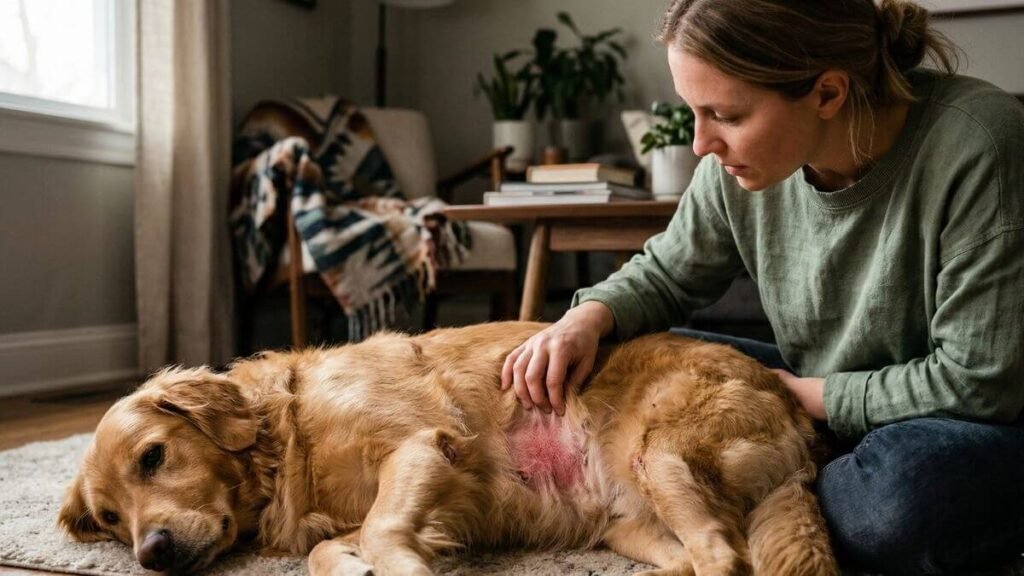

Allergies in dogs can make life uncomfortable with itchy skin, constant scratching, flare-ups after going outside, and irritated red patches. If your dog has dog skin allergies, bathing is one of the easiest ways to control symptoms. But over-bathing can dry the skin, strip natural oils, and actually make allergic dermatitis worse.
This guide shows exactly how often to bathe a dog with allergies, depending on the allergy type, skin condition, and coat needs.
We’ll cover
- How Often Should You Bathe a Dog With Allergies? (Quick Answer)
- How Bathing Helps Reduce Allergy Symptoms
- Best Shampoo Types for Dogs With Allergies
- Step-by-Step Bathing Routine for Allergic Dogs (Owner-Friendly Guide)
- Common Mistakes That Make Allergies Worse
- Home & Natural Remedies to Support Bathing
- Daily Environmental Control Tips for Allergic Dogs
- When to Seek Veterinary Advice
- How Professional Grooming Helps Allergy-Prone Dogs
Let’s begin with the essential…
How Often Should You Bathe a Dog With Allergies? (Quick Answer)
There is no single rule for every dog. Instead, how often to bathe a dog with allergies depends entirely on what triggers your dog’s itch. If you deal with environmental allergens like grass or pollen, frequent rinsing helps. Conversely, if the issue is food-related, bathing might not solve the root cause.
Use this chart to find your dog’s ideal schedule:
| Allergy Type | Bath Frequency | Best Shampoo Type | Notes |
| Environmental allergies (pollen/dust) | Every 7 days | Hypoallergenic shampoo | Helps remove environmental allergens from coat |
| Flea allergy dermatitis | Every 7–14 days | Sulfate-free shampoo | Use flea control + soothing baths |
| Food allergies | Every 2–4 weeks | Oatmeal shampoo | Diet matters more than bathing |
| Canine allergic dermatitis (general) | Every 1–2 weeks | Hypoallergenic products | Keep routine gentle and consistent |
| Yeast infections (Malassezia) | 2–3 times per week | Antifungal shampoo | Follow 10-minute contact time |
| Dry, sensitive skin | Every 2–4 weeks | Moisturizing shampoo | Prevent over-bathing |
Note: If your dog has severe allergic dermatitis, your veterinarian might initially suggest a more frequent schedule to bring the flare-up under control.
How Bathing Helps Reduce Allergy Symptoms
Many owners worry that water dries out the skin. However, water actually hydrates the skin if you seal it in correctly. When you understand how often to bathe a dog with allergies and do it right, you perform three critical tasks:
Washing Away Allergens From Skin and Coat
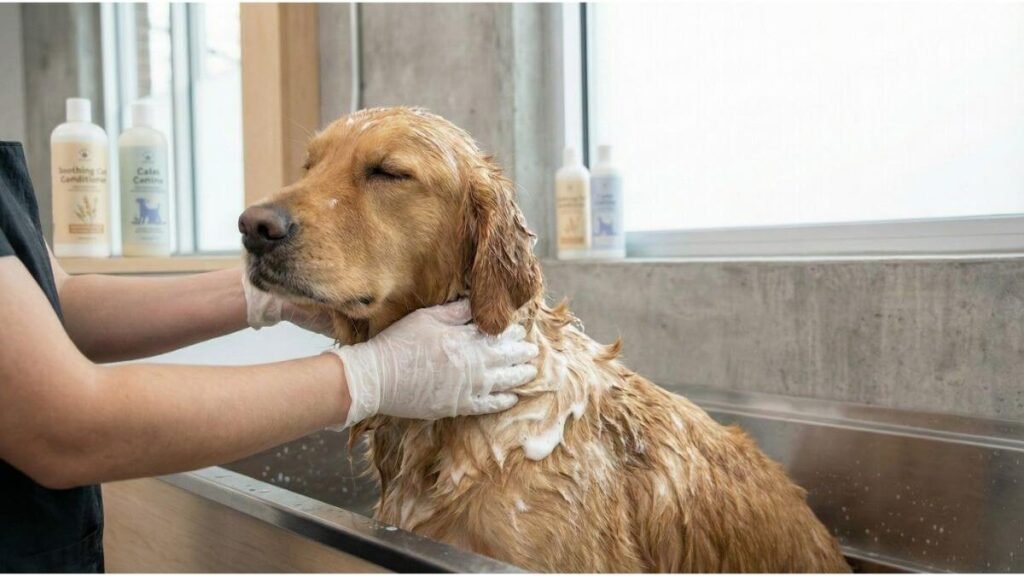
Your dog acts like a mop. Every time they go outside, they collect pollen and dust on their fur. By washing them, you practice effective environmental control, physically removing these microscopic triggers before they burrow into the skin. This technique is especially important for double-coated dogs (like Golden Retrievers), which trap allergens deep in their undercoat, compared to single-coated dogs.
Preventing Skin Sores
Constant scratching creates micro-tears in the skin barrier. Bacteria and yeast love these open wounds. Regular bathing keeps the skin clean, helping prevent nasty skin sores and secondary skin infections.
Immediate Itch Relief
Cool water and soothing ingredients calm the skin’s nerves. This provides immediate relief from the burning sensation of contact allergies.
Best Shampoo Types for Dogs With Allergies
Your schedule doesn’t matter if you use the wrong product. In fact, figuring out how often to bathe a dog with allergies is useless if you use a harsh detergent. Always look for these specific types of shampoos.
Hypoallergenic Shampoo (The Safe Bet)
A hypoallergenic shampoo contains limited ingredients to minimize reaction risks. It usually excludes fragrances and dyes. If your dog has sensitive skin but no infection, the above product serves as your best weekly option.
Oatmeal Shampoo (The Soother)
For dry, itchy skin, an oatmeal shampoo works wonders. Colloidal oatmeal binds to the skin, creating a protective barrier that locks in moisture. It acts as one of the best tools for soothing irritation.
Sulfate-Free Shampoo (The Gentle Cleanser)
Harsh foaming agents strip oil. Therefore, always choose a sulfate-free shampoo. These products clean without destroying the lipid barrier that allergic dogs desperately need.
Allergy-Safe Dog Shampoo
If your dog reacts to everything, look for an allergy-safe dog shampoo. These are specifically formulated to be non-irritating and often contain ceramides to rebuild the skin.
Emily’s Tip: Never trust the front label alone. Always check for hypoallergenic products that list ingredients clearly to ensure safety.
Are you uncertain about which brand to trust? We reviewed the top safety-tested options in our guide: 7 Best Dog Shampoos for Allergies.
Step-by-Step Bathing Routine for Allergic Dogs (Owner-Friendly Guide)
Even if you know exactly how often to bathe a dog with allergies, using the wrong technique can undo all your hard work. Because sensitive skin reacts to friction and heat, you must follow a gentle hypoallergenic dog bath routine to prevent flare-ups.
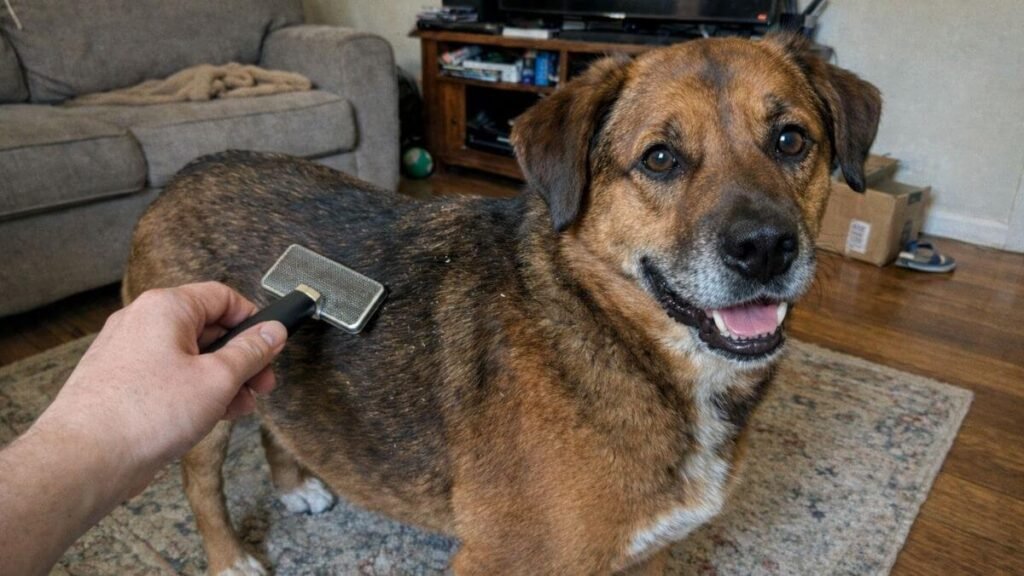
1. Brush Before Bath (Removes Dander)
Before water touches your dog, brush their coat gently. This removes loose dander and dead hair that traps allergens. If you skip this step, their hair mats will tighten when wet, trapping shampoo against the skin and causing irritation.
2. Use Lukewarm Water
Never use hot water. While it feels beneficial to us, hot water can inflame the skin and trigger intense itching in people with allergies. Instead, always use lukewarm (tepid) water to keep the skin calm and comfortable.
3. Apply Shampoo & Massage (5 Mins)
Apply your hypoallergenic shampoo and massage it gently into the skin. Crucially, do not rinse immediately. Most medicated or soothing shampoos need contact time (usually 5–10 minutes) to work effectively. During this time, the ingredients penetrate the skin barrier to soothe inflammation.
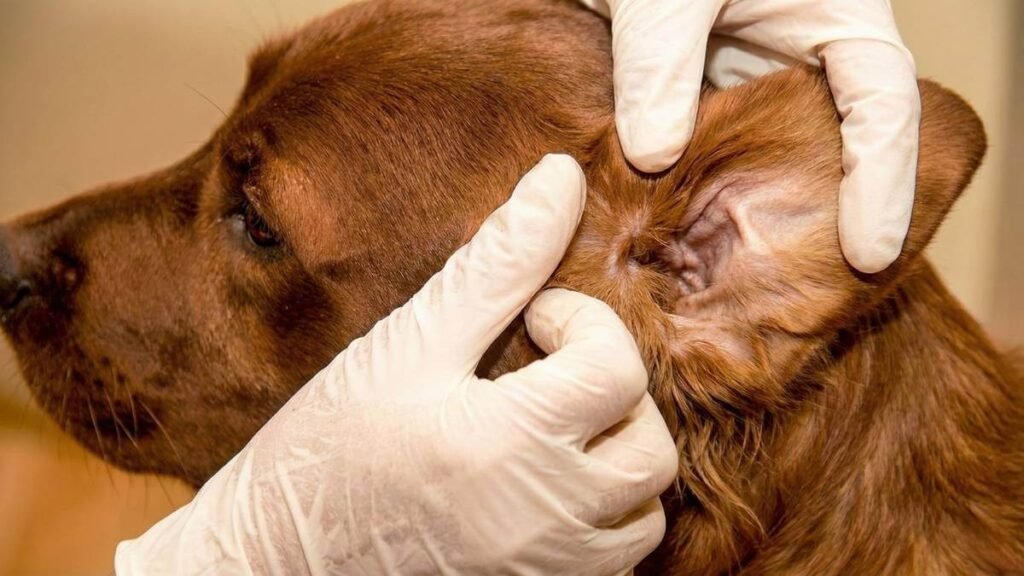
4. Don’t Forget the Ears
Often, dogs with skin allergies also suffer from ear infections. Therefore, include dog ear cleaning in your bath routine. Use a vet-approved cleaner on a cotton ball to gently wipe out wax and debris.
5. Rinse Thoroughly Twice
Soap residue is a major itch trigger. Therefore, rinse thoroughly until the water runs completely clear. Then, rinse one more time just to be safe. Leaving even a tiny amount of residue can cause secondary skin infections.
6. Pat Dry (Never Rub)
Avoid rubbing the towel back and forth, as this creates friction on raw skin. Instead, gently pat the coat dry. Rubbing acts like sandpaper on allergic skin, so a blotting motion is much safer.
7. Moisturize Skin
Immediately after drying, apply a dog-safe moisturizer or conditioner. This seals in the hydration from the bath and protects the skin barrier.
Need a visual guide? Check our complete tutorial here: How to Bathe a Dog with Itchy Skin: Gentle Step-by-Step Guide.
Common Mistakes That Make Allergies Worse
Determining how often to bathe a dog with allergies acts as only half the battle; avoiding these common errors matters just as much. Keep your dog comfortable by avoiding these pitfalls.
- Over-Bathing: While washing helps, over-bathing without using a moisturizer strips natural oils. This leaves the skin dry and vulnerable to cracking.
- Ignoring Smell: If your dog has an antifungal shampoo, it is necessary to reduce the number of yeast infections. This often indicates a yeast infection that requires medication rather than just soap.
- Wrong Shampoo: Never use the incorrect product. Specifically, using human shampoo disrupts the pH balance and destroys the acid mantle. Can I Use Human Shampoo on My Dog?
- Not Rinsing Enough: Residue looks like dandruff and feels itchy. Always double-rinse.
Home & Natural Remedies to Support Bathing
Sometimes, shampoo alone isn’t enough. Integrating natural remedies into your routine supports the skin between baths. However, make sure you aren’t confusing allergies with parasites like sarcoptic mange or demodectic mange, which require veterinary medication, not just home care.
- Aloe Vera: Pure aloe vera gel cools hot, red patches instantly. It acts as a beneficial spot treatment for belly rashes.
- Dietary Supplements: Skin health starts from within. Adding nutritional supplements rich in omega-3 fatty acids strengthens the skin cells, making them less reactive to allergens.
- Coconut Oil: Applying a small amount can help moisturize dry patches, though it is not a cure-all.
Daily Environmental Control Tips for Allergic Dogs
You cannot bathe your dog every hour, but you can manage their environment. Effective environmental control reduces the need for constant bathing by lowering exposure to triggers.
- Cleaning Paws After Walk: Keep a pack of hypoallergenic wipes by the door. Cleaning paws after every walk reduces allergen levels significantly.
- Protective Booties: If your dog is allergic to grass, having them wear protective booties outside prevents the allergen from touching their feet in the first place.
- Mobile Grooming: If bathing at home is too stressful or physically difficult, consider hiring mobile pet grooming. They come to your driveway and use professional equipment to remove allergens efficiently without the stress of a salon trip.
- Washing Bedding Weekly: Allergens accumulate where your dog sleeps. Therefore, wash their bedding weekly in hot water to kill dust mites.
When to Seek Veterinary Advice
While home care helps, some skin conditions require medical intervention. If you follow a strict schedule for how often to bathe a dog with allergies but see no improvement, you need to schedule veterinary check-ups.
Watch for these red flags that indicate home baths are not enough for allergic dogs:
- Severe Scratching: If your dog with allergies stops playing or eating, just scratch.
- Bleeding: Constant trauma leads to open wounds and skin sores.
- Hair Loss: Large bald patches require diagnostics like a skin scraping procedure to rule out mites or mange.
- Foul Smell: A musty odor usually indicates a yeast infection that requires prescription medication.
Occasionally, a vet must prescribe oral antihistamines or steroids to break the itch cycle. Therefore, do not rely solely on shampoo if the symptoms worsen over time.
How Professional Grooming Helps Allergy-Prone Dogs
Sometimes, handling the process of bathing allergic dogs at home feels overwhelming. In these cases, professional grooming offers a massive advantage. Groomers have access to high-velocity dryers that help with removing trapped allergens like dust and dander more effectively than a towel.
Furthermore, they can perform coat thinning, which allows medicated shampoo to reach the skin directly. If you remain unsure about how often to bathe a dog with allergies, a professional groomer can assess your dog with allergies and suggest a personalized schedule to support your medicated bath support plan.
FAQs
Here are answers to the most common questions owners ask about caring for allergic dogs.
How often should I bathe a dog with food allergies?
Typically, bathe them every 2–4 weeks. Since the trigger is internal, bathing helps soothe the itch but does not remove the cause. Focus on diet rather than increasing bath frequency for a dog with allergies to food.
Which shampoo is best for dogs with allergic dermatitis?
A hypoallergenic, fragrance-free oatmeal shampoo works best for a dog with allergies. Always avoid sulfates and look for soothing ingredients like aloe vera.
Can I bathe my allergic dog twice a week?
Yes, if they have environmental allergies or an active infection. Veterinarians often recommend this frequency during high pollen seasons to keep allergic dogs clean.
Is oatmeal shampoo good for dogs with skin allergies?
Absolutely. Colloidal oatmeal soothes inflammation naturally. It is the safest choice when determining how often to bathe a dog with allergies without drying out their coat.
How to prevent yeast infections in allergic dogs?
Keep skin folds dry and use an antifungal shampoo if needed. Proper drying after every bath prevents the moisture buildup that yeast loves on a dog with allergies.
Can over-bathing make allergies worse?
Yes, if you use harsh soap. However, if you use a moisturizing veterinary formula, frequent bathing is beneficial. The product matters more than the frequency when bathing allergic dogs.
What water temperature is safest for allergic dogs?
Always use lukewarm water. Heat activates itch receptors and makes redness worse for any dog with allergies.
Should I use antihistamines before bath time?
Consult your vet first. If your dog with allergies gets anxious or itchy during the bath, an antihistamine might help them relax and reduce skin reactivity.
Conclusion
Determining the frequency of bathing a dog with allergies can significantly improve their comfort. By switching from a “once a month” mindset to a therapeutic weekly schedule, you wash away the environmental triggers that cause misery. Whether you need a weekly rinse for pollen or a biweekly medicated bath for yeast, consistency is key.
Remember, the goal is to soothe the skin, not strip it. By using the right hypoallergenic products and following a gentle routine, you can stop the itch and help your dog with allergies live a happier, healthier life.
Ultimately, understanding how often to bathe a dog with allergies empowers you to take control of their skin health.
Still searching for the perfect bottle? Check our research-backed guide to find the safest option: 7 Best Hypoallergenic Dog Shampoos for Sensitive Skin.