
Is your dog shaking their head constantly or scratching at their ears until they whimper? Few things are more distressing for a pet owner than watching their companion suffer in silence. Ear problems are among the most common reasons for veterinary visits, yet many owners miss early warning signs until the condition becomes severe.
While occasional scratching is typical, persistent irritation typically indicates ear infections in dogs, a condition that requires prompt medical attention. Understanding the specific dog ear infection symptoms early can save your pet from chronic pain and potential hearing loss. In this vet-approved guide, I will walk you through the types, hidden causes, diagnosis, and effective treatments to restore your dog’s comfort.
We’ll cover
- What Is a Dog Ear Infection?
- Types of Dog Ear Infections
- Dog Ear Infection Symptoms (Complete List)
- What Causes Ear Infections in Dogs?
- How Are Dog Ear Infections Diagnosed?
- Dog Ear Infection Treatment Options
- Recovery & Management
- Prevention Tips for Dog Ear Infections
- When to See a Vet Immediately
What Is a Dog Ear Infection?
To understand why this occurs, we must examine anatomy. A dog’s ear canal is vertical and L-shaped, unlike a human’s horizontal canal. This design is excellent for hearing but terrible for drainage. It readily traps moisture, debris, and wax, creating a warm, dark environment in which bacteria and yeast infections thrive.
When inflammation occurs in the ear canal, it is medically termed Otitis. This inflammation is the precursor to most ear infections in dogs. If the canal remains moist or irritated, the skin barrier’s natural balance is disrupted. Recognising symptoms of dog ear infection at this early stage prevents the disease from progressing deeper into the skull.
Types of Dog Ear Infections
Not all infections are the same. Veterinarians classify ear infections in dogs into three categories based on the affected ear region. Identifying the types of dog ear infections helps in understanding the severity of the dog ear infection symptoms you are seeing.
Otitis Externa (Most Common)
This is an outer ear infection. It is the stage at which most owners first notice symptoms of a dog ear infection. The lining of the outer ear becomes inflamed, red, and swollen. Otitis externa is often caused by moisture or bacteria. If caught here, it is easily treatable with topical medication.
Otitis Media
If an external infection is left untreated, it spreads into the middle ear, causing otitis media. This affects the structures behind the eardrum. At this stage, the dog ear infection symptoms become more severe, often involving intense pain and reluctance to open the mouth or chew, as the jaw joint is close to the ear.
Otitis Interna (Serious Condition)
This is the most dangerous type. Otitis interna affects the inner ear, which controls hearing and balance. This often leads to permanent hearing loss or vestibular issues. Dogs with ear infections at this level require aggressive treatment.
Dog Ear Infection Symptoms (Complete List)
How do you know if your dog is suffering? While some signs are subtle, others are impossible to miss. As a veterinarian, I advise owners to look for these clinical dog ear infection symptoms during their daily routine.
- Head Shaking: If your dog is vigorously shaking their head as if trying to dislodge water, this is a prime indicator of ear infections in dogs.
- Constantly scratching ears: Intense ear scratching or rubbing the side of the face along the carpet suggests deep irritation.
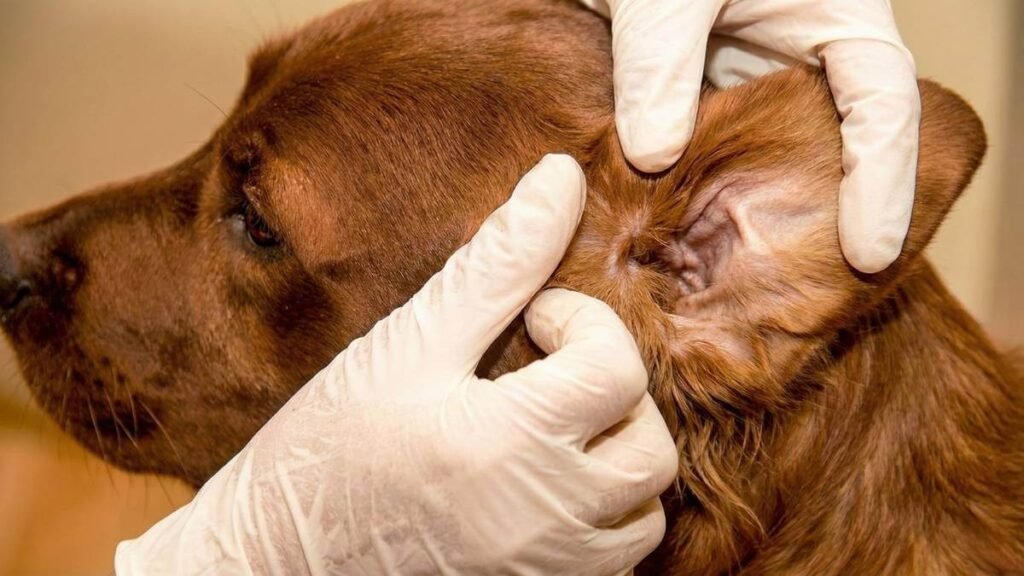
- Red or Swollen Ears: Lift the ear flap. If the skin appears angry red or there is ear swelling, these are classic signs of a dog ear infection.
- Bad or Yeasty Smell: A strong, musty, or cheesy ear odour is a hallmark of a yeast or bacterial infection. Read Why Does My Dog smell even After a bath?
- Dark Discharge or Wax Buildup: Yellow, brown, or bloody discharge is not normal. Coffee-ground-like debris indicates ear mites, while creamy or purulent discharge suggests a bacterial issue.
- Pain When Touching Ears: If your dog pulls away, cries, or snaps when you touch their head, they are in pain due to canine ear infections.
- Head Tilting: Holding the head to one side is one of the more concerning dog ear infection symptoms, often signalling the infection has moved to the middle or inner ear.
- Crusting Around Ear: Scabs or crusty skin around the ear flap can indicate sarcoptic mange or severe infection.
- Balance Problems: Walking in circles, stumbling, or loss of balance usually means the issue has progressed.
If you notice any of these dog ear infection symptoms, do not wait. Early intervention prevents chronic damage.
What Causes Ear Infections in Dogs?
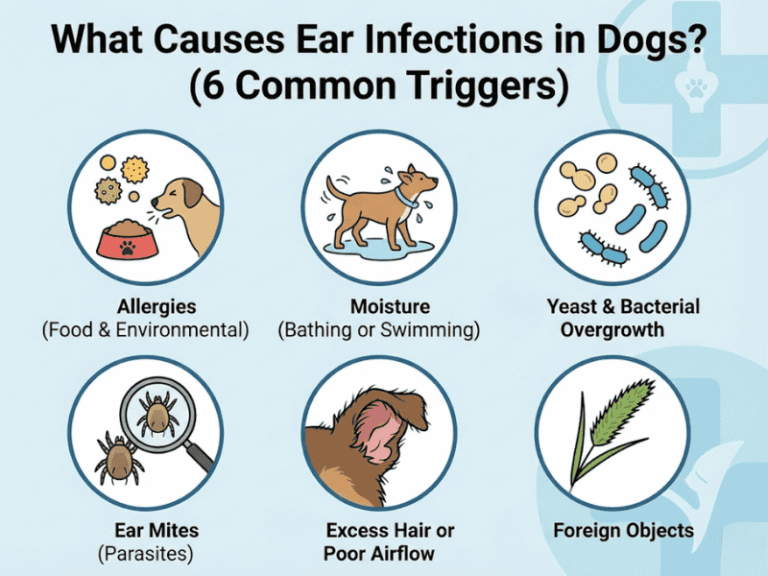
Finding the root cause is just as important as treating the infection. Understanding what causes ear infections in dogs is key because ear infections in dogs are rarely a primary disease; they are usually a symptom of an underlying problem.
Allergies (Food & Environmental)
Allergies are the number one cause. Dogs with environmental allergies (pollen, dust) or food allergies often get inflamed skin all over, including inside the ears. This inflammation disrupts the ear’s defence, leading to a dog ear infection. If your dog has recurrent ear infections, look at their diet.
Moisture After Bathing or Swimming
Water is the enemy of a healthy ear canal. Residual moisture after a bath or swim creates a humid environment perfect for yeast and bacteria. This is why ear infections in dogs spike in the summer months.
Moisture issues can also cause the whole body to smell. Read more: Why Does My Dog Smell Even After a Bath?
Yeast & Bacterial Overgrowth
Malassezia (yeast) and bacteria live naturally on the skin. However, when the ear environment changes due to humidity, they overgrow, leading to distinct dog ear infection symptoms.
Ear Mites (Especially Puppies)
Ear mites are microscopic parasites that are highly contagious. They are a common cause of ear infections in dogs, especially in puppies.
Excess Hair or Poor Airflow
Breeds with floppy ears (like Cocker Spaniels) or excessive hair in the canal have poor air circulation. This traps heat and wax, making them prone to showing dog ear infection symptoms frequently.
Foreign Objects
Grass seeds or foxtails can work their way down the ear canal, causing acute pain, head shaking, and ear trauma.
How Are Dog Ear Infections Diagnosed?
You might suspect your dog has an ear infection, but only a vet can determine the exact type. Here is how we diagnose ear infections in dogs clinically:
- Physical Ear Exam: We check for pain, swelling, and signs of ear infection in dogs. We also palpate the lymph nodes.
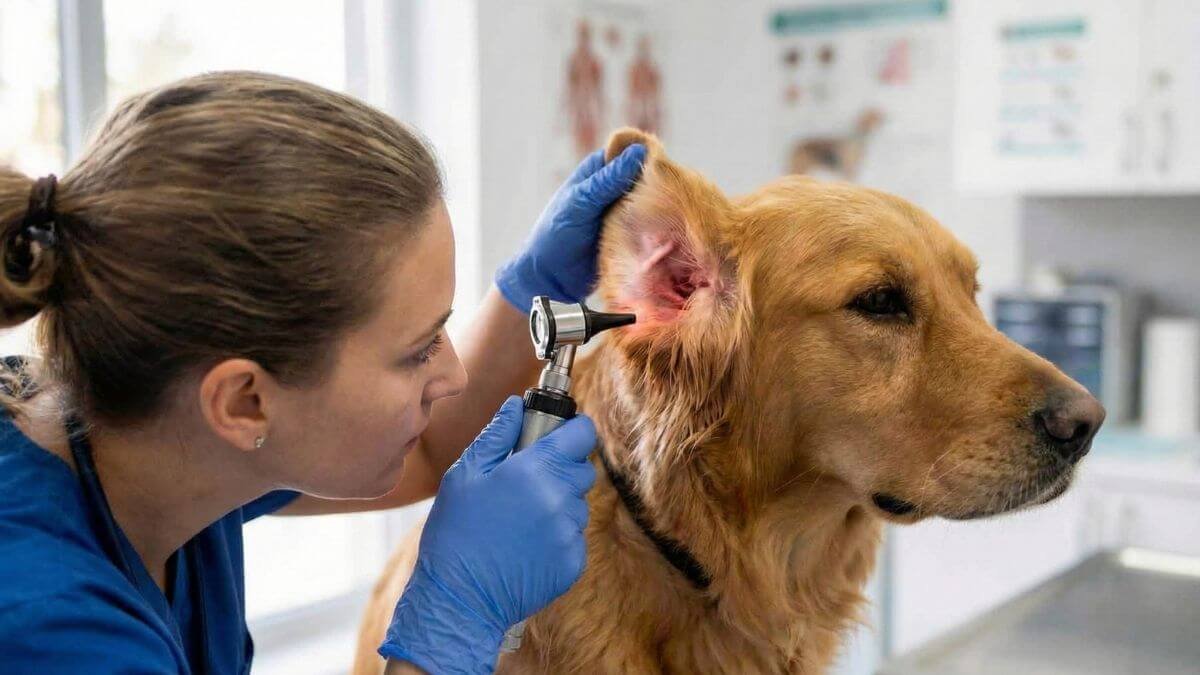
- Otoscope Check: We look deep into the canal to visualise the eardrum and rule out foreign bodies.
- Swab & Cytology: This is critical. We take a sample of the discharge to identify if the dog ear infection symptoms are caused by yeast, bacteria, or mites.
Why is this important? Because ear drops for bacteria will not kill yeast, and using the wrong medication can make resistant infections worse. We also check for endocrine disorders like hypothyroidism, which can cause chronic skin issues.
Dog Ear Infection Treatment Options
Once diagnosed, the treatment plan for a dog ear infection focuses on eliminating the pathogen and reducing pain.
Veterinary Treatments
- Medicated Ear Drops: Most canine ear infections are treated with drops containing antifungal, antibiotic, and steroid agents.
- Antibiotics or Antifungal Agents: For severe cases, oral antibiotics or oral antifungals are prescribed.
- Anti-inflammatory Medication: Oral steroids help reduce swelling, allowing the dog ear infection symptoms to subside so medication can penetrate.
At-Home Support (NOT cure)
While treating ear infections in dogs, home care is vital.
- Vet-Approved Ear Cleaning: Use a medicated ear cleaning solution to remove debris.
- Drying Ears Properly: Ensure the ears remain dry to prevent bacteria from returning.
- What NOT to use: Never use hydrogen peroxide or alcohol. These sting painful ears and worsen dog ear infection symptoms.
Recovery & Management
Recovering from ear infections in dogs takes time and discipline.
- How Long Healing Takes: Most uncomplicated infections resolve within 1–2 weeks, but chronic ear infections may take months.
- Importance of Completing Meds: Even if the dog ear infection symptoms disappear after three days, finish the full course.
- Preventing Recurrence: If your dog suffers from recurrent ear infections, we must investigate underlying allergic skin disease.
Prevention Tips for Dog Ear Infections
Preventing ear infections in dogs is easier than treating them. By incorporating simple habits, you can stop the dreaded dog ear infection symptoms before they start.
- Regular Ear Checks: Make it a habit to smell and look inside your dog’s ears weekly. Catching a slight odour early is key to spotting signs your dog has an ear infection.
- Proper Ear Drying: After every bath, use ear cleaning wipes or cotton balls to dry the canal.
- Breed-Specific Care: If you have a dog with hairy ear canals, consult a groomer about trimming the hair to prevent ear infections in dogs.
- Hypoallergenic Grooming: Use gentle products to avoid irritation.
- Diet & Allergy Management: If food allergies are the trigger, switching diets may stop the cycle of dog ear infection causes.
When to See a Vet Immediately
While all dog ear infection symptoms require attention, some signs indicate a medical emergency. See a vet if you notice:
- Severe Pain: Your dog cries when the ear is touched.
- Head Tilt or Loss of Balance: These vestibular signs indicate the infection has breached the inner ear.
- Bleeding or Pus: Discharge indicates severe tissue damage.
- No Improvement: If dog ear infection symptoms do not improve after 48 hours.
- Facial Paralysis: Drooping on one side of the face is a serious complication of deep ear infections in dogs.
- Unusual Eye Movements: Rapid eye movement suggests neurological involvement.
FAQs
Here are answers to common questions about ear health.
Can dog ear infections heal on their own?
No. They typically worsen without treatment as bacteria multiply in the warm canal.
Are ear infections contagious?
Most are not, unless caused by parasites like mites, which spread easily between pets.
Can I use home remedies?
It is risky. Putting liquids into an ear with a ruptured eardrum can cause deafness. Get a diagnosis first.
How often should I clean my dog’s ears? For healthy dogs, once a month is sufficient. Over-cleaning can irritate.
Conclusion
Dealing with ear infections in dogs is frustrating. However, recognising the dog ear infection symptoms early, such as head shaking, odour, or redness, is your best defence. Whether caused by allergies, moisture, or anatomy, these infections are treatable with appropriate treatment for dog ear infections.
Remember, symptoms should never be ignored. Proper care and follow-up appointments ensure your dog lives a happy, pain-free life.
Is your dog itching everywhere, including the ears?
Persistent itching often indicates allergies or skin conditions. See our vet-approved guide: Home Remedies for Dog Itching.
Disclaimer: This content is for educational purposes only and does not replace professional veterinary advice. Always consult a licensed veterinarian for diagnosis and treatment of any medical condition.